
Natasa Sears: design and visual practice
Work with the picture
Natasa’s visual work helps people examine a situation together. These examples show work for Natural England, Birmingham City Council, and the Local Government Association.
Project information comes from the published design portfolio. The questions below are guidance for discussing and using the images.
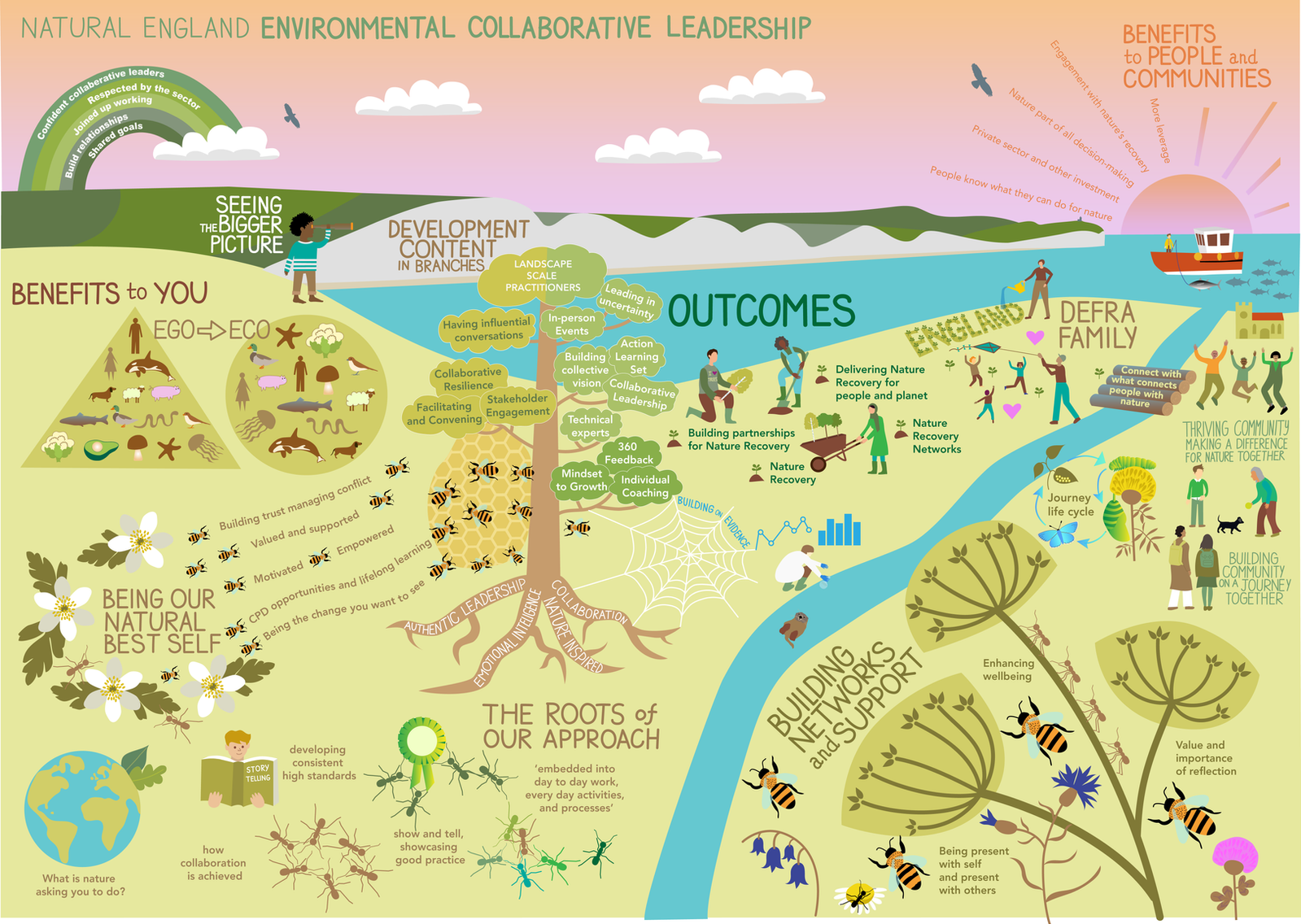
Natural England: Environmental Collaborative Leadership
Natasa Sears · Rich picture · 2023
Using the image
Compare what participants see in the picture: whose purposes count, who is responsible, and what they can change together.
Questions for discussion
Who can make or block a decision in this picture? Which relationships would other participants add?
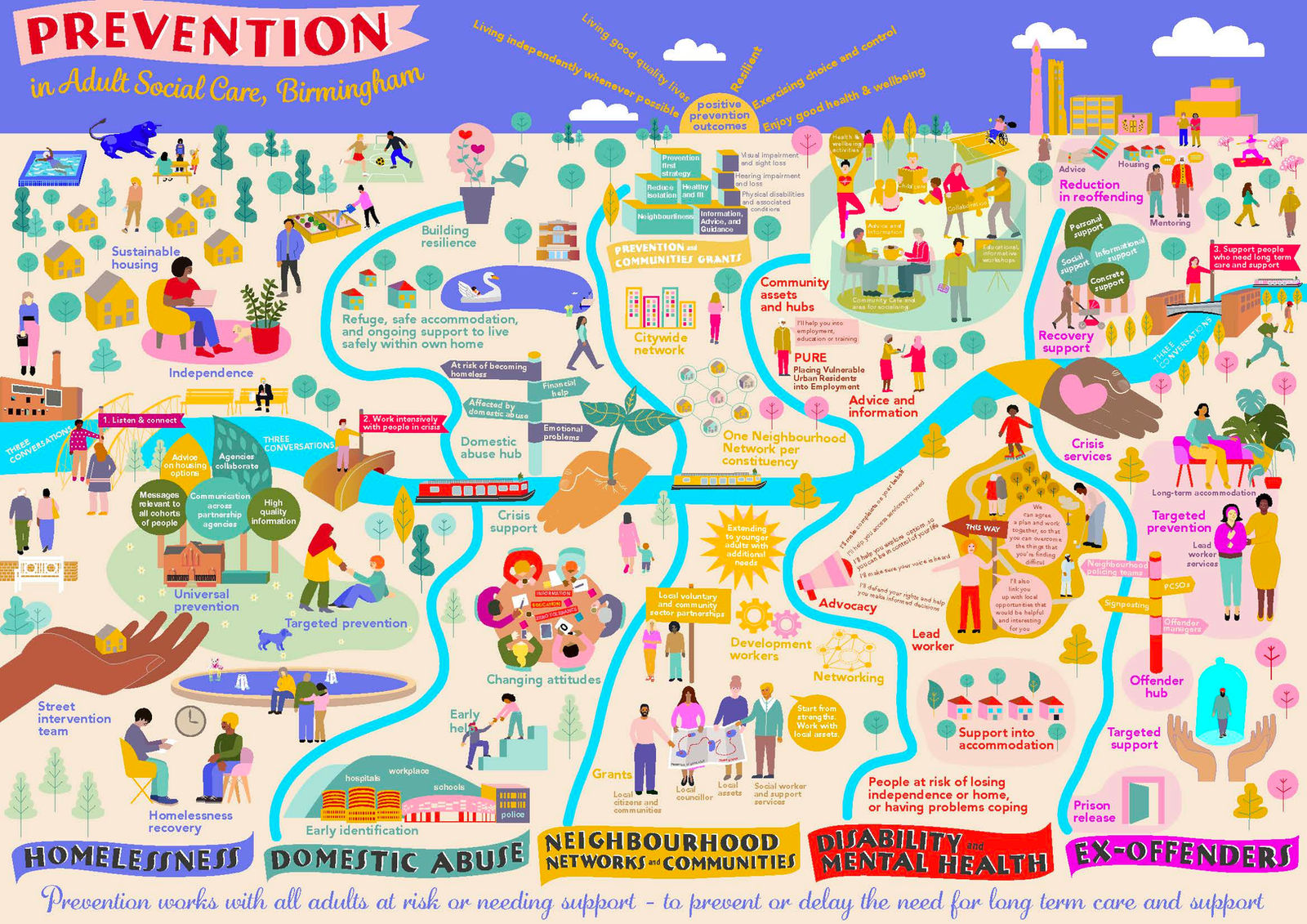
Birmingham City Council: Prevention in adult social care pathways
Natasa Sears · Rich pictures · 2021
Using the image
Follow one actual experience through the representation. Mark missing relationships, disputed links, and the decisions needed to investigate them.
Questions for discussion
Where does the account start: the service pathway or the person’s life? Which work, delay, or support becomes invisible at the edge of the picture?
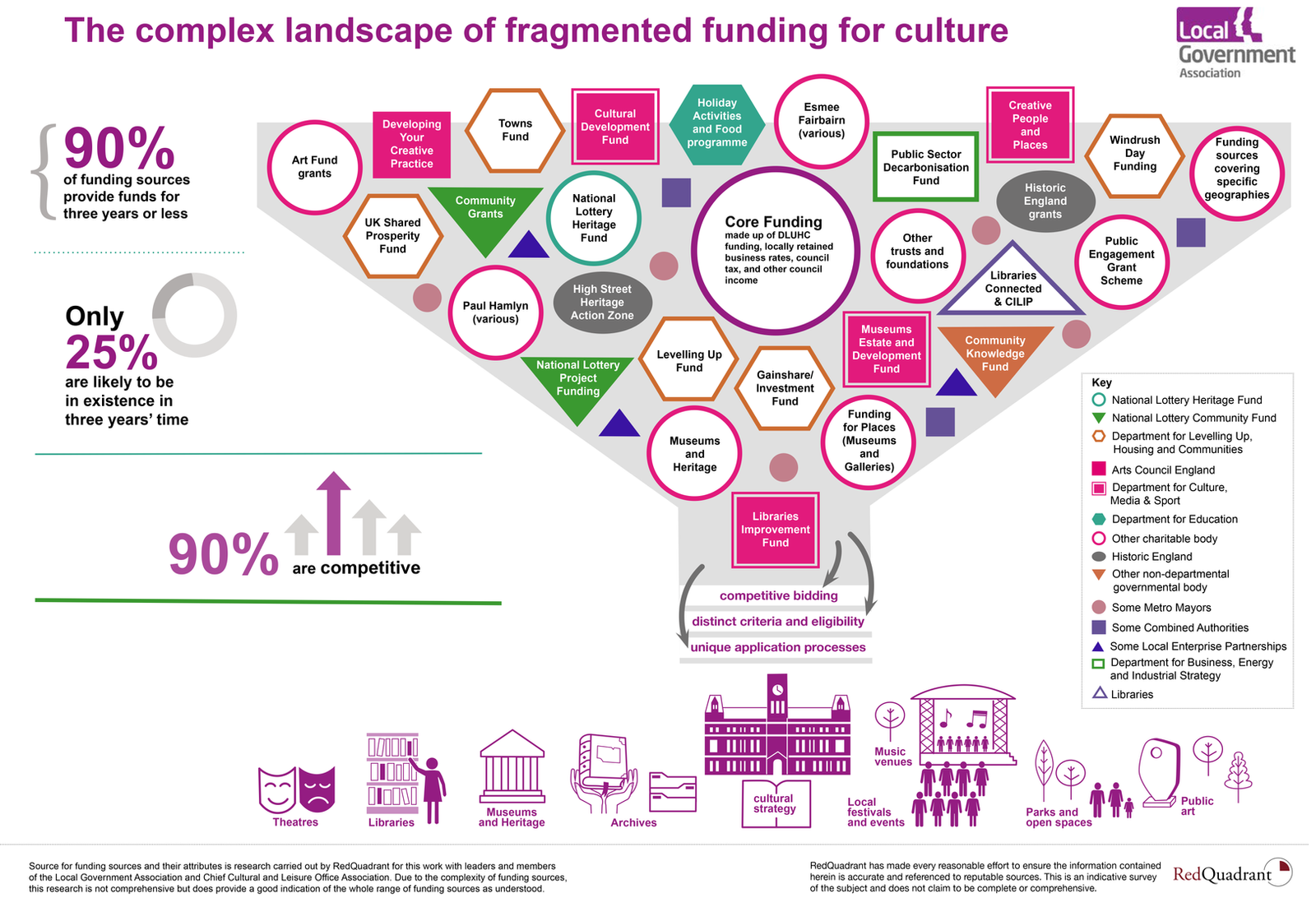
Local Government Association: Cultural devolution research
Natasa Sears · Research infographics · 2024
Using the image
Put the visual account beside the underlying evidence. Separate what the image establishes from what it invites you to ask.
Questions for discussion
What do you need to know about the research to interpret the infographic? Which decisions or local conditions need further explanation?
Running a discussion with a rich picture
- Name the situation and the people who need to recognise it.
- Draw what different people see, including uncertainty and contradiction.
- Invite additions, corrections, and alternative boundaries.
- Record what changed in the picture and why.
- Choose an action or inquiry, with responsibility and a review date.
- Return to the picture and inspect what actually happened.
Keep the earlier version where participants agree: it can show a change in understanding more clearly than the finished image alone.